
A website should introduce your business and its benefits clearly and lead prospects toward taking the desired action. If customers can no longer understand the information you want them to know, your services have changed, or the website fails at representing your company, you may need to redesign your website.
This update can range from a strategic overhaul of the site to updating particular features such as navigation and contact forms. It depends on your goals and the website’s role in meeting them.
This article will walk through the requirements, considerations, and processes for a website redesign. If you are still determining your requirements, you can book a website design consultation with Carlsson Studio to define objectives and discuss options.
What are website redesign services?
Website redesign services support businesses during a website redesign and update process. This service includes analyzing the organization’s objectives, optimizing the design and content, improving the website’s performance on mobile and desktop screens, and migrating the site to a new platform if required.
A website redesign can be as simple as refreshing content and style or as involved as developing new site structures and programming. Depending on your requirements, the project can focus on a few pages, an area of the site, or the whole website. The primary criterion is to identify the experience and information you want to deliver to your audience better.
When should you redesign a business website?
There is no standard timeline for redesigning a business website. Some sites can exist for years, while others are redesigned every two years. It depends on the organization’s needs and how well the website has met its goals. In most cases, it helps to determine the requirements before developing a redesign plan.
Below are some factors that may indicate that a website redesign is required:
- Your business has changed. Your services, audience, pricing, or positioning have evolved, but the site still describes an earlier version of your business.
- Visitors can’t find what they need. Important pages are buried, navigation labels are unclear, or people have trouble understanding what to do next.
- The experience breaks down on mobile. Text is hard to read, buttons are difficult to use, or key content doesn’t fit smaller screens.
- The site creates unnecessary work. Updating basic information is difficult, or your team relies on workarounds to manage pages and inquiries.
- Your core pages don’t answer customer questions. Visitors need clearer explanations of services, process, pricing factors, or what happens after they get in touch.
- The site has performance or accessibility problems. Slow pages and barriers to using forms, menus, or other features can make the site harder to use.
These issues are the reasons to consider a redesign, but it is important to identify the primary requirements and focus on them rather than making a broad redesign.
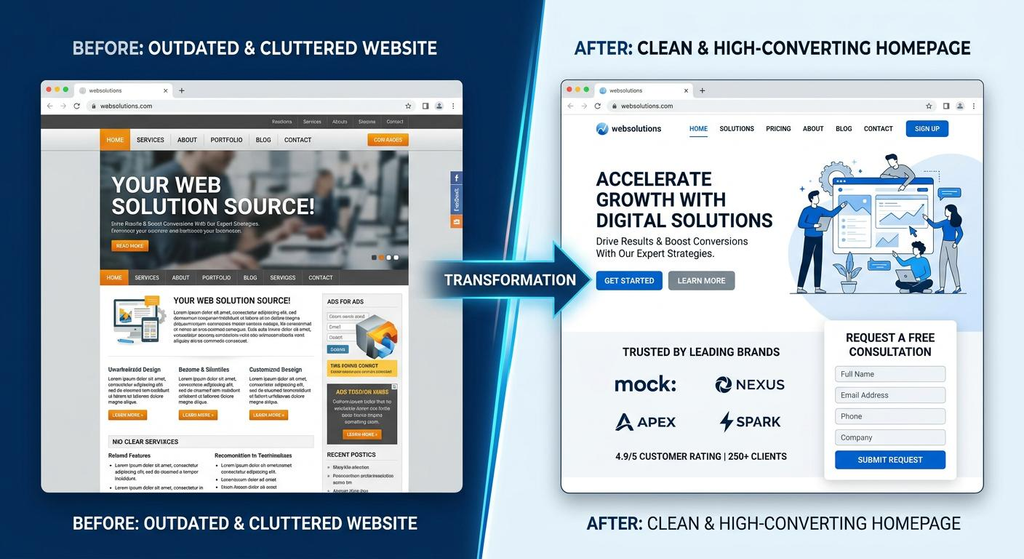
If you are considering a redesign, you can book a consultation with Carlsson Studioto walk through the requirements for your website redesign project.
What to review before starting a website redesign
Before changing the design, take stock of what the current website is doing. This helps protect the useful parts of your site and gives the project clear priorities.
Business objectives and audience requirements
Write down what the website needs to support. Your goals might include generating qualified inquiries, explaining a service, helping customers find a location, or selling products. Then consider what visitors need to do to reach those goals.
For example, a potential client may need to compare service options, review your work, and understand how to begin. If the redesign makes those steps easier, it can improve the experience even without adding elaborate features.
Content and page performance
List your key pages and check whether each one is accurate, useful, and up to date. Look at website analytics or available search data to see which pages attract visitors and where people are coming from. Pay attention to important pages that already earn traffic or external links.
Keep useful content where it is, improve it where needed, and decide deliberately what should be combined, removed, or redirected. A visual update shouldn’t accidentally erase information that helps customers or search engines understand your business.
Mobile-friendliness, accessibility, and performance
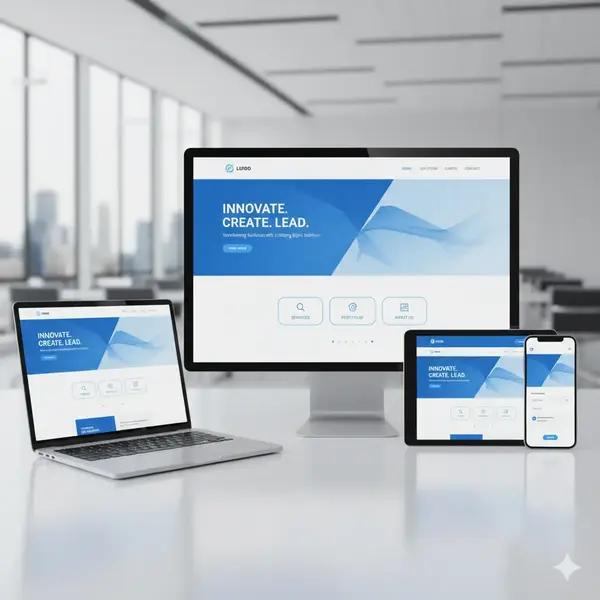
Test your website on mobile and desktop and ensure that it functions well on all screen sizes. In addition, review your website’s performance, including page speed and image optimization. A mobile responsive redesign can ensure that your website functions well on all devices and offers a better experience. You should also think through accessibility guidelines and ensure that your website is easy to navigate for all your customers.
The W3C’s Web Content Accessibility Guidelines (WCAG) 2.2 provide testable recommendations for making web content more accessible. For performance, Google’s Core Web Vitals guidance explains user-focused measures related to loading, responsiveness, and visual stability.
Platform and tools
Review the tools connected to the site, such as forms, booking systems, payment services, analytics, and customer relationship management software. A redesign is a good time to confirm that each integration still serves a purpose and works reliably.
Also check who can update the site, what maintenance it needs, and whether the current platform can support your plans. Choosing technology should follow your requirements, budget, and team’s capacity rather than a trend.
The website redesign process
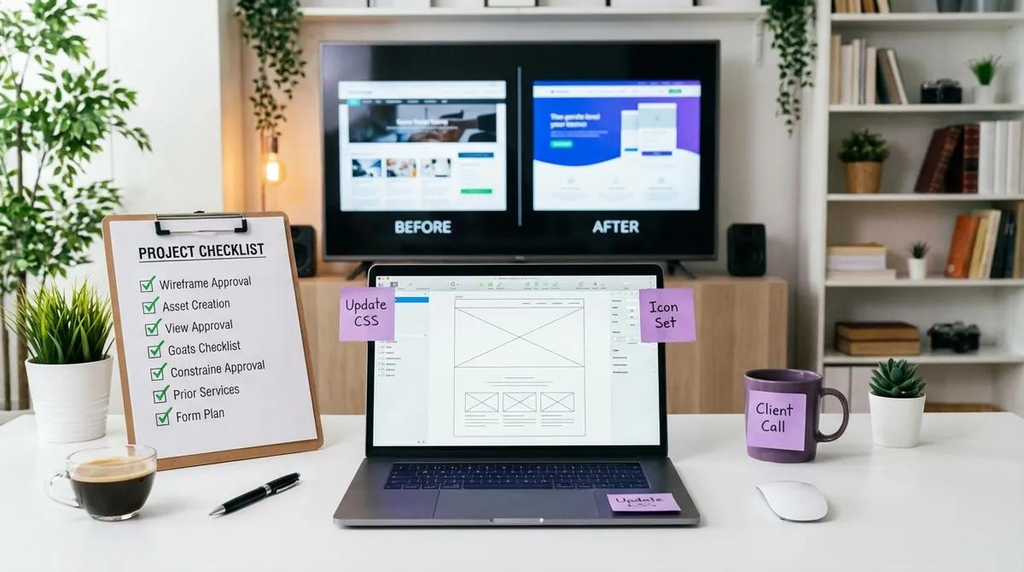
A clear website redesign process helps connect business priorities with design, content, and technical work. The details vary from one project to another, but these stages provide a helpful framework.
1. Discover and define the scope
Start by agreeing on the main problem, audience, goals, pages, and constraints. Gather input from the people who use or maintain the site, along with feedback from customers if available.
Set practical success measures before work begins. Depending on the project, these might include more completed inquiry forms, fewer support questions about basic information, or stronger engagement with key service pages. A redesign can support these outcomes, but results also depend on factors such as your offer, marketing, and competition.
2. Plan the redesign
Based on the requirements, it is possible to plan the redesign and think through the website structure, information architecture, and content strategy. The website should have well-defined pages to meet your business goals and audience requirements. The pages should also have distinct purposes and be intuitive to navigate.
When planning the content strategy for your redesigned website, it is helpful to draft the content and review it before finalizing the design. It will ensure that the content actually meets your requirements and fits into the planned design. At the same time, this stage should also involve a review of the existing content on your website. It is important to keep the information that your audience finds valuable and update or remove the outdated content. A website redesign should not remove the content that your audience wants, and it can help to identify it based on your website analytics and general knowledge of your audience.
3. Design and develop
Based on your business requirements and the content strategy, your website designer should develop a design concept for your website. The design should align with your brand guidelines and ensure that the website is easy to read and navigate.
After developing the design, the website should be built using responsive design practices so that it looks good and functions well on all devices. Particular attention should be paid to the details, including calls to action, image optimization, performance, and accessibility. Your website designer should also review these aspects and ensure that the website design and development parts meet your requirements and audience expectations.
4. Review, launch, and optimize
Before launch, review the site on different devices and test all key journeys. Check copy, images, links, forms, analytics, and technical settings. If URLs are changing, prepare a URL map and appropriate redirects.
Google Search Central’s site move guidance recommends preparing the new site, mapping old URLs to their new destinations, setting redirects, and monitoring the move. Those steps matter when a redesign changes URLs; a visual refresh that keeps the same URLs may not require a full migration plan.
After launch, monitor the measures you defined at the start. Look for broken links, form issues, unexpected changes in traffic, and feedback from users. Use what you learn to prioritize follow-up improvements.
How to choose website redesign services
When choosing website redesign services, it is essential to understand how a company will help you with your requirements. A good conversation will involve asking about your business, the website redesign goals, and the technical aspects of the project. A reputable company will be able to suggest solutions based on your specific requirements rather than using a one-size-fits-all approach. Below are some questions that may help you choose the best option for your website redesign project.
Ask the company to describe their process for understanding the business, its audience, and website requirements before starting a redesign project. Ask about their suggestions for a responsive design, performance, and SEO-friendly URLs. You should also enquire about their experience with website migrations and ask for references if possible. In addition, ask about the support and maintenance options, including the responsibilities of both parties after launching a redesigned website. Ask about their recommendations for SEO, redirects, and website performance. Finally, ask about what is included and not included in the website redesign project.
If you’re planning an update, book a consultation with Carlsson Studio to talk through your current website, priorities, and potential scope.
Common website redesign mistakes to avoid
Below are some common mistakes that should be avoided when redesigning a website:
- Avoid focusing on trends rather than user needs. A new design can help your website to look more modern and attract more traffic. However, it is essential to ensure that the website updates align with the users’ requirements and business goals.
- Avoid removing content that your audience wants. If you are redesigning your website, you may want to shorten the long webpages and group the information into categories. However, it is important to ensure that the content actually serves a purpose and is not being removed just because it is lengthy.
- Avoid skipping SEO during a redesign. Search engine optimization (SEO) should be an integral part of a redesign project. It is essential to ensure that the website’s content and structure are optimized for search engines so that it can be easily discovered by your target audience. SEO considerations should include title tags, headings, internal linking, indexability, and redirects if applicable.
- Avoid launching the redesigned website without testing. Before launching the redesigned website, it is crucial to test it to ensure that everything is working correctly. The testing should include reviewing all the calls to action, links, and forms on the website. Testing can also involve asking your customers to complete particular tasks, such as finding a specific service or submitting an inquiry.
- Avoid skipping maintenance after launching the redesigned website. A redesigned website is not a one-time project, and it will require regular maintenance to ensure that it continues to function well and looks great. In addition to maintenance, it is also important to update the website content regularly.
Plan your next website update
A successful website redesign begins with a clear reason for change. Review the current site, identify what visitors need, protect valuable content, and define how you’ll judge progress. Then choose an approach that fits your goals, budget, and ability to maintain the finished site.
If you’re ready to explore an update, book a website design consultation with Carlsson Studio. You can discuss what’s working, what needs attention, and whether a focused update or broader website redesign is the right next step.