
Choosing a website design company is a business decision, not a design choice. Your website is where potential customers may seek you out and research your offer, and make a choice about getting in touch. The right partner will understand your needs, deliver a site that serves customers and works for your team, and grow with your business.
There is no universal best agency for small businesses. Some companies will need a simple brochure website, while others may benefit from online booking, e-commerce, custom plugins or a complete brand audit. The right proposal considers your business goals, practical and future requirements, and the potential for a long-term relationship.
This guide will explain how to select a web designer or development partner, what questions to ask a shortlisted provider before finalizing the engagement, and how to evaluate the proposals you received on comparable terms. Here’s an overview of the main considerations when selecting a website design company.
What does a website design company do?
A company that offers web design services typically delivers a range of solutions. Some providers offer end-to-end support, from audience research and information architecture to copywriting, development, search engine optimization (SEO), and post-launch support. Others specialize in particular areas such as visual design or developer-heavy solutions like website development. Your requirements may also include website maintenance services.
Your project scope defines the extent of support you will receive from a web design company. A designer will typically handle the creation of layouts and graphics, while a developer will work on the technical aspects of your website. Small agencies and freelance professionals usually manage website design and development.
Before comparing providers, identify your requirements. For example, you may need a website that allows customers to request a callback, book services, make purchases, or browse your offerings in their area. Clarifying your requirements will help you receive comparable quotes from different companies.
How to choose a web designer: Start with your goals
It is critical to identify your goals in plain language before launching your search. A request such as “We need a modern website” is a helpful starting point but does not provide a web designer with actionable instructions. Instead, create your vision in plain language.
If your company currently attracts few qualified inquiries, you may request a higher volume of quality leads. Some clients prefer a faster publishing process so that they can update service lines or pricing changes. Your requirements may also include a stronger focus on online sales or customer service. Define your audience and the outcome they should achieve by engaging with your website.
A competent designer will ask clarifying questions about your audience, your offer, and your process. Avoid providers who promise to deliver a specific result without understanding your customer journey. If a company asks you to describe your customers, the value you deliver, or your preferred publishing process, it is a good sign. They will be better able to recommend solutions that actually serve your customers and contribute towards your business goals.
Your brief does not have to be complex, but it should state your requirements, your ideal audience, the primary offerings or information you want to present, your preferred page types, any special requests, and your timeline. You may also mention any existing assets such as your logo, brand guidelines, photographs, or website copy.
Review similar work in the provider’s portfolio
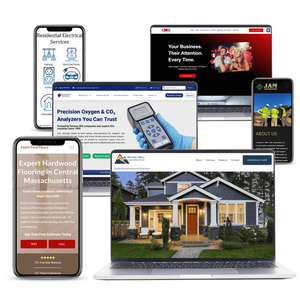
A portfolio can show a provider’s visual style, but look beyond whether the sites are attractive. Explore a few live projects and ask yourself:
- Can you quickly tell what each business offers?
- Is the navigation easy to understand?
- Does the site work well on a phone?
- Are the pages readable and easy to scan?
- Are the calls to action clear?
- Does the design fit the business and its audience?
Look for projects that are similar to yours. A provider who has delivered successful solutions for a service-oriented business will typically be a better fit for your consulting practice than an e-commerce website. While the industry is important, a similar business model and target audience matter more.
Ask about the specific scope of the work, if the team managed strategy and design, developed the site, delivered helpful content, or handled some tasks in-house.
What does the website design process look like?
A competent company will clearly explain how your project will unfold. While every website building project is unique, most providers follow a similar process. They should be able to outline their process and explain your role in it. You are likely to be engaged throughout the development cycle, providing feedback on design directions, reviewing content for publication, and approving the website before it launches.
Ask which parties manage the strategy, design, and development, and how you will be notified of project updates. You may receive regular email reports or updates, or have a dedicated account manager who will notify you of developments.
Some companies also implement a change control process to manage updates and additional requests after the original project scope has been fulfilled. Ask how the provider controls changes to the initial project scope and manages additional costs. A clear process will help you avoid misunderstandings about your responsibilities or additional expenses once the project is complete. Both parties should clearly understand the expectations before work commences, including who is accountable for specific tasks, an approximate timeline for the project, and what approvals are necessary.
Compare web design company proposals
Proposals should outline the scope of work, but it is critical to ensure that you are comparing comparable solutions. Two companies may use similar language, but one may propose a comprehensive redesign while another only updates an existing website.

Ask each provider to list what is included and what costs extra. In particular, clarify:
- Number and type of pages
- Copywriting, editing, and image sourcing
- Mobile layouts and responsive development
- Content management system setup
- Forms, booking, e-commerce, or other integrations
- Basic on-page SEO and analytics setup
- Accessibility and quality checks
- Training, maintenance, hosting, and post-launch support
Some providers only build websites while others offer a range of options. Ask which additional elements you will need to budget for separately. For example, a website may be built with SEO in mind, but the company may charge extra to implement specific SEO practices. Similarly, basic analytics such as Google Analytics may not be included in a proposal, but it is a crucial tool for analyzing your website’s performance.
Who owns the website?
At the end of the project, you will have a website that meets your specifications. It is equally important to understand what additional elements you will need to budget for separately. Some providers only build websites while others offer a range of options. Ask which additional elements you will need to budget for separately. For example, a website may be built with SEO in mind, but the company may charge extra to implement specific SEO practices. Similarly, basic analytics such as Google Analytics may not be included in a proposal, but it is a crucial tool for analyzing your website’s performance.
Web design companies offer varying degrees of support and additional services. Choose a company that clearly communicates their expectations while also being flexible with your needs. Avoid providers who promise unrealistic outcomes, such as guaranteeing a first-page ranking on Google or a specific sales increase.
Compare web design proposals and budgets
Cost is an essential consideration, but it should not be the sole factor when selecting a website design company. Choose a provider whose expertise aligns with your requirements and who offers realistic support options for your project. It is equally important to ensure that you are comparing comparable solutions. Two companies may use similar language, but one may propose a comprehensive redesign while another only updates an existing website. Ask for clarification on the specific elements that are included, such as the number of web pages and their types, copywriting and page editing, responsive design and mobile optimization, content management system implementation, forms or booking tools, SEO-friendliness, accessibility, quality assurance, and post-launch support.
Ask the proposed solution to identify the terms of payment, what happens if the project extends beyond your initial timeline, and additional expenses such as those involved with extra revisions. You should also ask for an itemized invoice, or at least a breakdown of costs in simple terms, and ask what expenses would require your approval. A competent provider will be transparent about expenses and answer your questions about their billing practices in simple language.
A good provider will be willing to work within your budget constraints. For instance, if your budget is tight but you want to meet your launch date, they might suggest prioritizing high-impact pages and adding other pages later. This approach enables you to get your website online while leaving room for enhancements down the road.
Consider post-launch support
Many companies fail to consider the ongoing maintenance and evolution of their website after launch. The provider should understand your maintenance and update expectations. If you want to update your website yourself, inquire about training and support resources. If you do not plan to make updates, ask about their support options, including response time, hourly rates, and support plans. You may also want to obtain details about their emergency support procedures.
Both parties should thoroughly understand the responsibilities involved in the maintenance and updates of the website. A competent provider will walk you through the handover and ensure that you are familiar with the fundamental elements of your new website. You should always receive login credentials for your content management system and any other tools that may be relevant. Furthermore, you should obtain vital information such as the website’s domain registration and hosting details.
Questions to ask before hiring a website design company
Use the following questions when talking to a provider for the first time or reviewing their proposal:
- What parts of the project will your team handle?
- What do you need from me, and when?
- How do you decide on the site structure and design direction?
- Who will be my main contact?
- What is included in the quote, and what is extra?
- How are revisions and scope changes handled?
- What testing takes place before launch?
- Who owns the site, accounts, and design files?
- What support is available after launch?
- How will we know whether the site is meeting its goals?
These questions will help you clarify the deliverables and process, but good communication goes beyond identifying what the provider will do. A competent provider will be forthcoming about their limitations and concerns in straightforward language.
Make the decision that fits your business
The right website design company will have relevant experience, offer appropriate support, and be a competent communicator throughout the project. Review their past work and evaluate the scope of the proposed solution. Compare the proposals you received and clarify the expectations from your end. A positive relationship with a competent provider will make your project significantly simpler and the final product more valuable to your customers.
If you’re considering a new website or considering a redesign, schedule a discovery call with Carlsson Studio to discuss your goals and next steps. You may also contact Carlsson Studio to explore the services that we provide or schedule a conversation about your website and ask your questions.